How a Three-Bucket System and Guardrails Can Support a $10,000-a-Month Paycheck
Video: Can You REALLY Spend $10K a Month From $2.5M? (The 4% Rule Says No)
A retiree can spend more than the 4% rule suggests when the plan has structure: cash buckets built from real bills, a withdrawal order, and guardrails that adjust spending. For retirees who saved well and still feel guilty spending, Josh walks through that three-part system with a couple he calls Dave and Susan.
Watch on YouTube ↗ (opens in a new tab)
What you’ll learn
- Why Bill Bengen’s 4% figure answered one narrow question and was never designed as a retirement plan
- How Josh builds cash buckets up from actual bills rather than slicing a portfolio into three piles
- What the buckets are for when stocks fall in the first year of retirement
- Why the order you withdraw from changes the tax bill on identical spending
- How guardrails let the paycheck flex instead of being gripped for decades
- What Josh’s planning tables put a balanced retiree’s starting rate at, and why it is not one number for everyone
Summary
Josh opens with a couple he calls Dave and Susan, who want $10,000 a month from $2.5 million and feel greedy for it, because the 4% rule says that is more than their share. He explains that the rule came from Bill Bengen answering one narrow question — the most you could have pulled starting at the worst moment in market history — and that Bengen has since said his own number was too conservative. Building a whole retirement around it, Josh says, often leaves money and years on the table rather than making anyone safer.
What replaces it is a system: three cash buckets built up from real bills, a withdrawal order decided fresh each year, and guardrails. The buckets exist so a market drop does not force a sale to cover groceries. The order matters because pulling from a brokerage account, where generally only the gain is taxed, can land long-term gains in the 0% capital gains bracket. Guardrails let the paycheck adjust by a specific dollar amount for sustained runs, and Josh says his planning tables, built on Guyton and Klinger’s research, put a balanced retiree’s starting rate somewhere around 4.8% to 5.5%.
“The 4% rule was never designed to be a retirement plan.”
Key moments, in Josh’s words
What does the 4% rule actually say?
Josh describes it as taking about 4% of your savings in the first year, with history suggesting the money should last. He notes retirees have also heard the rule is outdated, and that hearing so does not make withdrawing more than 4% any easier to accept.
“take about 4% of your savings in year 1”
Why was the 4% rule created?
Josh says the man who created it, Bill Bengen, was answering one narrow question: the most you could pull out starting at the worst possible moment in market history and still not go broke. It was a cautious number built for the worst case, and Bengen has since said his own number was too conservative.
“he was answering one narrow question”
How much cash should sit in an emergency bucket?
The simple version Josh uses is about half a year of core living expenses kept completely out of the market — not invested, but in a high yield money market or savings account, preferably one with no state tax on the interest. He describes it as roof-leak, new-transmission, someone-gets-sick money.
“about half a year of your core living expenses”
Does it matter which account my retirement paycheck comes from?
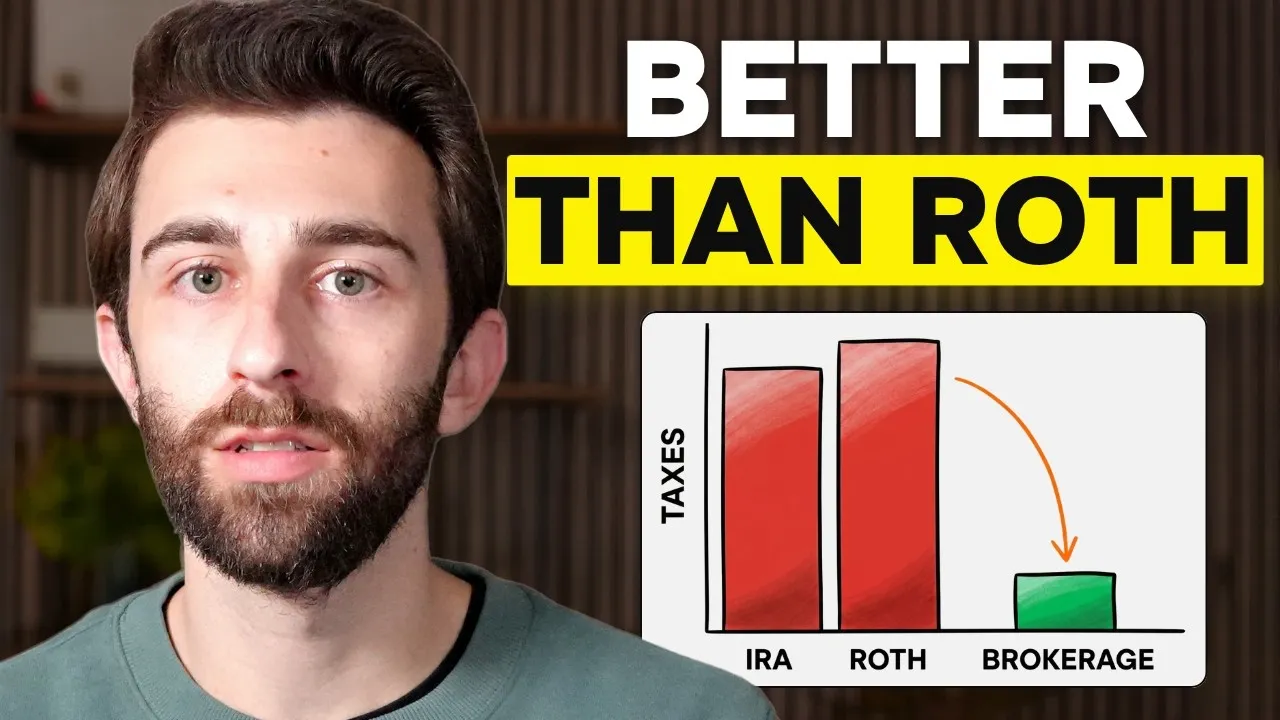
Josh says the order you pull from can change your tax bill by thousands or even hundreds of thousands of dollars for the exact same amount of spending. He adds there is no fixed rule: the right order is decided fresh every year, revisited quarterly, and based on your whole tax picture rather than one bracket.
“the order you pull from can change your tax bill”
What are withdrawal guardrails?
Instead of picking one withdrawal number and holding it for decades no matter what, Josh explains that guardrails let the paycheck adjust a little with how the portfolio actually does. He compares them to a speed limit: the question is not whether you are over the line but for how long.
“Instead of picking one withdrawal number and gripping it”
Does a flexible withdrawal plan mean spending less than the 4% rule allows?
Josh says that when the guardrails are actually run for a couple like Dave and Susan, the sustainable starting number often does not come out lower than they hoped — in many cases it comes out higher. His planning tables put a balanced retiree’s starting rate somewhere around 4.8% to 5.5%, depending on asset mix, time horizon, and method.
“the sustainable starting number often doesn’t come out lower than they hoped”
Do most retirees actually run out of money?
Josh cites recent research from EBRI finding that even about two decades into retirement, roughly 31% of higher asset retirees still had at least as much as they started with. He notes plenty of retirees do draw down meaningfully, but says for most people who saved well, running out was never the most likely outcome.
“roughly 31% of higher asset retirees still had at least as”
What this covers
About Josh
I’m Josh Rendler, CFP®, founder of Motion Retirement and Partner at Define Financial. I turn complex retirement questions into clear strategies, and I uphold the fiduciary standard, 100% of the time.
Keep exploring
Example case study. Details are changed and some examples combine more than one household. Nothing here is a recommendation, and your own numbers will be different. What I say in a video reflects the rules and that person’s situation at the time of recording. That includes the age required withdrawals begin, which depends on your year of birth. Check anything that matters against the current rules and your own situation.
The guide
Get the guide with the key numbers behind videos like this one
All the important retirement numbers in one place
Read the full transcript
0:00 So Dave and Susan just retired at 65 and there’s one number they can’t stop staring at. They want to pull $10,000 a month out of their portfolio, but every time they think about it, the same feeling hits. That feels like too much because somewhere along the way, they heard about the 4% rule. And $10,000 a month from 2.5 million, well, that’s not 4%. So here’s the question actually running through their heads. Can we and how do we really take $10,000 a month without running out? The answer is all about the system you build around it.
0:34 When I sit down with clients like Dave and Susan, the fear is almost always the same. And it usually comes from the same place. Now, you’ve heard it before, the 4% rule, which is take about 4% of your savings in year 1. And history says your money should last. Now, you’ve also probably heard this rule is outdated. But does that really help retirees mentally accept withdrawing more than 4%. From what I hear from retirees all the time, no, not really. The fear doesn’t care that the rule moved. On $2.5 million, 4% is around $100,000 a year or about $8,300 a month. And Dave and Susan, they want $10,000. So, right away, their own instinct tells them that they’re being greedy. Here’s the part most people are never told. The 4% rule was never designed to be a retirement plan. The man who created it, Bill Benjen, he was answering one narrow question. What’s the most you could pull out starting at the worst possible
1:32 moment in market history and still not go broke? And since then, he said his own number was even too conservative. It was a cautious number built for the worst case. And honestly, even then, it isn’t perfect. So, when you build your whole retirement around that number, you’re not really being safer. You’re often just leaving money and years on the table. Think about what that gap actually is for Dave and Susan. The difference between $8,300 a month and $10,000 a month is about $1,700 every single month. And you don’t get those years back later. Now, some of you might be thinking, “Okay, but more spending means more risk, and that’s just math.”
2:12 I get why it feels that way, but let’s address that head-on today. Whether $10,000 a month is safe or reckless isn’t really about the $10,000 itself. It’s mostly about the structure you build around it. A rigid 4% with no system can actually be more fragile than a flexible bigger number with the right system underneath it. And that system is really just three buckets and one rule that governs them all. Let’s build the buckets first. Here’s where most three bucket videos get it wrong. They tell you to slice your whole portfolio into three piles. There’s cash, bonds, and stocks, and shuffle money between them on some kind of schedule. It sounds tidy, but that’s not what actually protects your paycheck, and it’s entirely incomplete. The way we do it is almost backwards from that. We don’t start with your portfolio. We start with your life, and we build the buckets up from your actual bills. So bucket one,
3:08 that’s your emergency cash. The simple version we use is about half a year of your core living expenses sitting completely out of the market, not invested, but in a high yield money market or savings account and preferably one with no state tax on the interest. This is the roof leak new transmission, someone gets sick kind of money. Then bucket two is your spending bucket. This is the standard stuff, the groceries, the everyday costs of your actual life.
3:36 you already know is coming. In bucket three, this is the one that changes the most in retirement. Let’s call it the everything else bucket. This is the kitchen remodel coming up in a couple of months. The two big trips you’ve been promising yourselves. Each one gets named, sized, and set aside in cash equivalents. Not actual cash under the mattress, but safe and liquid accounts, ideally about a year before you’re actually going to spend it. For Dave and Susan, those three buckets come out to somewhere around $200,000 in cash. And that’s our foundation. Everything else can stay invested. Now, here’s why we do it this way, and it’s something most retirees are afraid of. Watch what happens the moment the market drops 20%.
4:22 Right in their first year of retirement, it’s easy to think, well, now I have to sell my investments while they’re down just to pay for those groceries. And that’s exactly why these three buckets exist. So Dave and Susan aren’t forced to sell investments the moment stocks drop. Their monthly paycheck or withdrawal can come out of the cash buckets they filled on purpose, which buys the portfolio time to recover and cuts the odds they’re stuck selling while it’s down. And that fear, the one that keeps so many good savers from ever spending, what if the market crashes right when we retire? Well, the buckets take a lot of the weight out of that fear. Now, there’s one number inside Dave and Susan’s plan that a lot of retirees are getting backwards, and I’m going to come back to it before the end because it changes how much they’re actually able to spend. But first, we have to answer a different question.
5:14 Where does this $10,000 a month actually come from? Here’s a question a lot of retirees don’t even think about until it’s too late. When you pull your monthly paycheck, which account does it come out of? because the order you pull from can change your tax bill by thousands of dollars, hundreds of thousands of dollars, even for the exact same amount of spending. Now, most people, they assume there’s a simple rule. Just spend your taxable account first or just live off the IRA. And it’s easy to see that appeal because it’s one rule and it’s done forever. But there isn’t a fixed rule and anyone selling you one is probably leaving your money on the table. The right order is decided fresh every year, revisited quarterly, and it’s based on your whole tax picture, not just one bracket. So, let me show you what I mean with David and Susan. They want $120,000 to actually spend for the year, and that’s the
6:09 $10,000 a month. Watch two ways we can pull it out. The first way, they take all of it straight out of the pre-tax IRA. Every dollar of that is ordinary income. And their standard deduction, the age 65 add-on, and the senior deduction, well, after that, they’d owe roughly $8,200 in federal tax on a $120,000 withdrawal, which means to actually withdraw $120,000.
6:36 Only about $112,000 of it is left to spend. The rest had to go to the IRS. Now, the second way, they pull most of the year’s money from their brokerage account and their cash, where generally only the gain is taxed, not the entire sale. And because they kept their taxable income low, those long-term capital gains can fall into the 0% capital gains bracket. For a married couple, you can have quite a bit of income before long-term gains get taxed at all. You’ve seen us cover this on the channel before. So, take that same $120,000 withdrawal. If roughly $50,000 of it is long-term gains and they’ve kept their other income low, that gain can land in the 0% bracket and the federal tax bill drops from about $8,200 to a few hundred. Now, this depends on your basis versus your gains in the account. And of course, everyone’s different, but in this case, that’s roughly $8,000 a year that stays in Dave
7:34 and Susan’s pocket for nothing other than pulling in the right order. Real quick, if you are a DIYer or tackling this on your own, there’s no need to memorize these brackets and numbers, I put together a free guide, all of them are in one place and it’s linked in the description below. Now, back to Dave and Susan because it actually gets even better. Keeping their income that low also leaves room to move some IRA money into their Roth cheaply in the very same year, which can lower their future RMDs and reduce their lifetime tax bill.
8:06 There’s something worth introducing here, too. They’re actually holding off on social security for now and living off the portfolio in the meantime. But there’s a real case for a lot of retirees. We’re taking social security early actually beats waiting, even when the math on paper says to wait. We’ll circle back to that before the end. So, let’s get to the last piece. This is the one that answers the whole question.
8:29 What makes $10,000 a month last for 30 years? So, we have the buckets and we have the paycheck coming out in the smartest order. There’s one rule left and it’s the one that answers without running out. We call them guardrails. Here’s the idea in plain English. Instead of picking one withdrawal number and gripping it for 30 years, no matter what, your paycheck is allowed to adjust a little with how your portfolio actually does. The best way I’ve heard it described is it’s like a speed limit.
8:57 The guardrails aren’t asking, “Are you speeding?” They’re asking for how long. Now, I’m not much of a fan of traffic tickets, but if I race down the freeway at 85 for a short stretch on my way to work, my odds of getting pulled over are pretty low. Now, if I do it from San Diego all the way to Vegas, I’m getting a ticket. It’s the same with your spending. A short stretch above the line paired with a down market, well, your cash buckets can absorb it. What we actually adjust for is the long sustained run. And some of you might be thinking, adjust means cut. So in a bad year, I’m back to my college diet of ramen noodles. Nope, not even close.
9:35 When a real downturn hits and the portfolio drops enough to trigger the spending cut guardrail, the adjustment is a specific dollar amount, usually around 10% less than what you were spending before. And the reason that works so well for retirees is that it puts a real number on all of this. When the market drops, so many retirees want to slam the brakes on everything. But with guardrails, you can see the exact number you’re still able to spend. Maybe it’s trimmed a little, sure, but probably no ramen noodles in your future. Now, here’s that number I told you a lot of people get backward. When we actually run the guardrails for a couple like Dave and Susan, the sustainable starting number often doesn’t come out lower than they hoped for. It can, in many cases, come out higher. Our own planning tables built on the guardrails research pioneered by Gaitton and Clinger put a balanced retirees starting rate somewhere around
10:31 4.8% to 5.5% so not 4% and it’s depending on your asset mix your time horizon and the method that you use. And there’s no magic number that’s true for everyone. It has to be solved for your specific and unique situation. For Dave and Susan, $10,000 a month is not reckless. It’s a rate a flexible strategy like this can fully support. So the data is clear, but the systems most people use are not. Recent research from EBRI found that even about two decades into retirement, roughly 31% of higher asset retirees still had at least as much as they started with.
11:11 Underspending, it’s real. Plenty of retirees also draw down meaningfully. But the point stands for most people who saved well, running out of money was never the most likely outcome. So this was never about hoarding. It’s about permission. That’s the whole point of the buckets and the guardrails. Not to keep you scared of your own money, but to give you the confidence to actually spend it or gift it or whatever else you want to do with it. It’s all about giving yourself permission. Now, if you’d rather have a team of CFP®s build one system around your whole retirement, so the buckets and the tax order and the guardrails are all done the right way, there’s a link below to book a free call with my team. Or if you’d rather run it yourself, that free guide should really help you out. So, let’s go back to where we started. Can you really draw $10,000 a month from $2.5 million without running out? For a lot of retirees, yes.
12:04 And not because it’s a sure thing, but because the three buckets make you far less likely to sell in a panic. The withdrawal order keeps the taxes low and the guardrails flex the number so it can last. Dave and Susan turned the paycheck on. And the money that used to just sit there making them nervous, it finally has a job paying for the life they spent 40 years earning. Now, about that social security decision Dave and Susan were sitting on. There’s a surprisingly strong case for claiming early, even when the math looks like it says to wait. I break down exactly when that’s the smarter move in this video right here. Thanks for watching and I’ll see you