Long-term care: the risk and the arithmetic
Josh Rendler, CFP®
Long-term care is help with everyday activities — bathing, dressing, eating, moving around — rather than medical treatment. Medicare does not pay for it. It covers a short stretch of skilled nursing after a qualifying hospital stay and stops there. Most people who need care pay for it from savings until they qualify for Medicaid, and the cost of one long event is usually borne by the spouse who is left.
The short version
- Long-term care is help with daily activities, not medical treatment. That distinction is what decides who pays.
- Medicare excludes it. What Medicare does cover is a limited stretch of skilled nursing after a qualifying hospital stay.
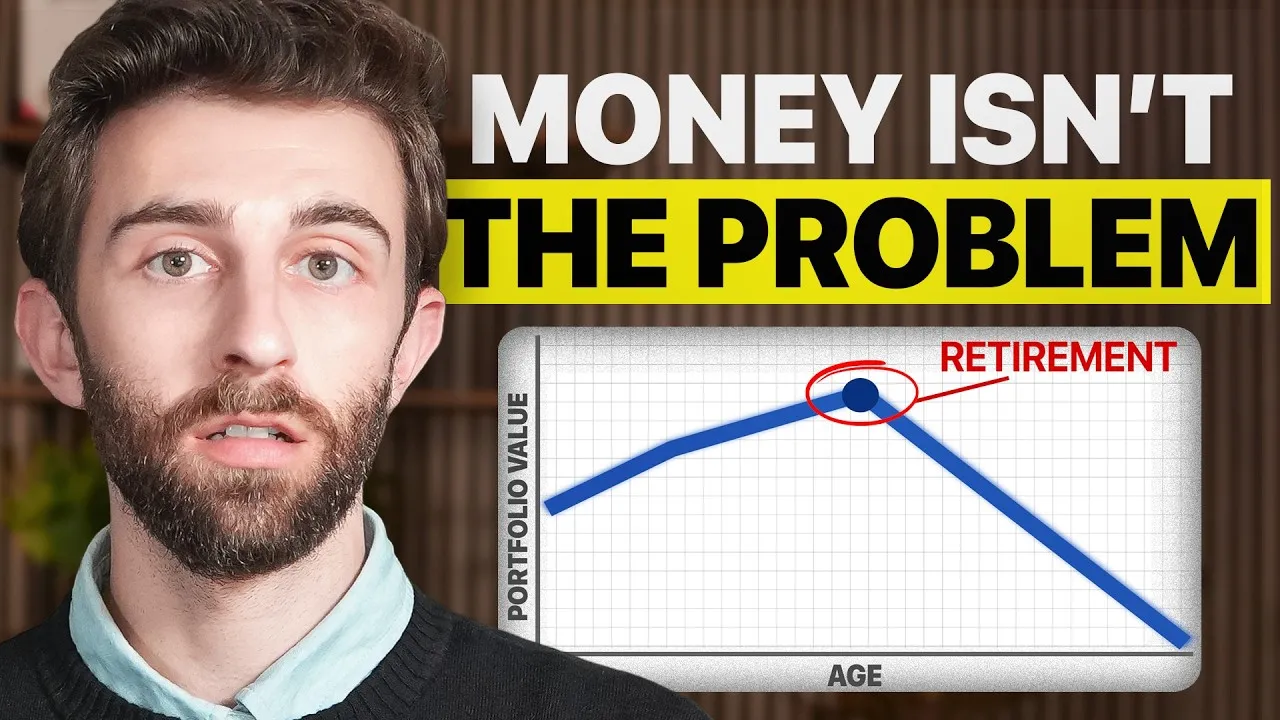
- It is a moderate-probability event with an enormous tail: about a third never need it, and one in five needs it for more than five years.
- The number that decides whether it breaks a plan is the duration, not the annual price.
- The biggest cost is usually not the care. It is what the survivor is left with afterwards.
What is long-term care?
Long-term care is help with the ordinary activities of a day rather than treatment for an illness. Bathing, dressing, eating, getting to the bathroom, moving from a bed to a chair. The formal name for it is custodial care, and that word is doing more work than it looks like it is doing.
The distinction matters because it decides who pays. Care that treats a condition is medical, and medical coverage pays for it. Care that helps you live with a condition is custodial, and it falls outside almost every policy a retired household already holds.
There is a formal test for when care is considered necessary. It is worth knowing, because it is the trigger written into the tax code and into most private policies.
A person qualifies when they cannot perform at least 2 of the everyday activities without help. The help also has to be expected to last at least 90 days. It is a threshold about function, not diagnosis. You can be seriously ill and not meet it. You can also meet it without being ill at all.
That is why a household can be well insured for medical care and hold nothing that pays for this. The two systems are answering different questions.
Most of it is not delivered in a nursing home either. More people receive care at home, and for longer, than in facilities. A picture of this risk that starts in a nursing home starts in the wrong place.
That matters for the arithmetic as much as the mental image. Home care is usually bought by the hour, so the bill tracks how many hours a day someone needs — and that climbs slowly, then all at once. Facility care is a flat monthly price from the first day. The two fail in different ways, and a plan that models only one has modeled half the risk.
What does Medicare actually cover?
Medicare covers skilled nursing care in a facility after a qualifying hospital stay, and it stops at 100 days per benefit period. That’s a genuine benefit and it isn’t nothing. It isn’t long-term care.
The exclusion is not a gap somebody forgot to close. It is written into the statute.
It is also the fact most people get wrong. They usually get it wrong right up until the week they need the answer, and there is no worse moment to learn it.
The confusion is understandable. Medicare does pay for care in a nursing facility, and a nursing facility is where many people picture long-term care happening. But what it pays for there is skilled treatment after a hospital stay. That stops when the treatment does, not when the need does.
- Skilled nursing after a hospital stay is covered, up to the statutory maximum, and only while the care is genuinely skilled.
- Custodial care is excluded, whether it is delivered at home or in a facility, and whether or not you also have a medical condition.
- Hospice is covered. It is a different benefit for a different situation, and it is not a substitute for this one.
- Medicare Advantage plans are still Medicare. A plan may add a limited benefit around the edges. None of them turns the exclusion off.
- A hospital stay is not automatically a qualifying one. Being kept overnight for observation is not the same as being admitted, and the distinction decides whether the skilled-nursing benefit is available at all. It is a paperwork question with a five-figure answer, and families find out about it afterwards.
How long does care last, and what does it cost?
The duration is the number that decides whether this breaks a plan. Almost every article you will read leads with the annual price instead.
Averaged across everyone who uses any services at all, care runs about three years. Women need it longer than men do, and the gap is not small.
But the average is the least useful figure in the set. About a third of people turning 65 today will never need care at all. About one in five will need it for longer than five years.
So this isn’t a high-probability, moderate-cost event. It is a moderate-probability event with an enormous tail, and those two things call for completely different planning.
The annual price matters too, and it varies more than any national figure suggests. What a year costs depends on where you live and on the kind of care. Between a metro area and a rural one the difference can be a multiple, not a margin. Run it on local prices or the number tells you nothing.
Planning to the average is planning to a number that will not describe you. What the arithmetic is actually for is finding out whether the tail is survivable.
So who pays for it?
In practice there are three payers, and most households meet two of them in sequence. Savings go first. Medicaid begins when they’re gone. Between those two sits whatever private coverage a household arranged in advance, which is a decision this site does not make for you.
Medicaid is the largest payer of long-term care in the country, and it is means-tested. Qualifying means spending down assets to a threshold set by your state.
That is why this arrives as a financial question long before it arrives as a medical one. Federal rules protect what the healthy spouse may keep. They exist because the alternative impoverished the person who didn’t need care.
- Savings, until they are gone. For most $2M households this is the entire first phase and it is where the plan is actually tested.
- Medicaid, once assets fall below the state threshold. The rules on what the healthy spouse may keep are federal and are the reason the next section exists.
- Private coverage, if it was arranged in advance. Whether that is worth doing is a decision with real arguments on both sides, and it is yours rather than this page’s.
If it helps to have the numbers in one place, I keep them all in the Ultimate Retirement Guide.
The part that costs the most, and it is not the care
A long care event usually happens to one spouse. The money comes out of a shared portfolio, and the person who lives with the consequence is the one still alive when it ends.
It’s worth being concrete about the sequence. The sequence does the damage, not any single step in it. Care begins. The portfolio funds it, often for years. Then the first spouse dies, and the survivor keeps the smaller of the two Social Security checks rather than both. In the same breath their tax filing status changes.
There is a second effect that arrives at the same moment and is almost never modeled alongside the first. When one spouse dies, the survivor files as a single taxpayer the following year. The brackets are roughly half as wide, the standard deduction is smaller, and the Medicare income thresholds do not move. The same income is taxed harder.
So the household absorbs the cost of care and then the survivor absorbs a permanently higher tax rate on a portfolio that just got smaller. Those two events are correlated and they compound. Running the care cost against a joint tax picture, which is the intuitive way to do it, understates what actually happens.
This is the strongest argument for looking at the arithmetic years early, while there are still choices about which accounts the money would come from.
Illustrative example
Neil and Priya, both 72, and a four-year care event
Every figure below is round and invented, chosen to show the shape of the sequence rather than to describe anyone. Their local price for care is their own number, not a national one.
They start with a $2,000,000 portfolio. Neil needs full-time care for four years, and the bill is paid from that portfolio. Priya does not need care, and she outlives him.
Two things are deliberately held still. Nothing here assumes any growth on the portfolio, and Priya’s spending is held at what the couple spent. A survivor’s spending usually does fall somewhat, and a portfolio usually does move. Holding both flat is not a forecast — it is how you isolate the one thing this example is about.
The last two rows are the point. They ask what Priya draws each year, on each of two portfolios, for the same monthly life.
- Portfolio before care begins
- $2,000,000
- Their local cost of care, per year
- $110,000
- Years of care
- 4
- Total cost of the care event
- $440,000
- Portfolio after the care event
- $1,560,000
- Neil’s monthly Social Security benefit
- $3,400
- Priya’s own monthly benefit
- $1,900
- Household Social Security each year, both alive
- $63,600
- Priya’s Social Security each year, after Neil dies
- $40,800
- The income that stops
- $22,800 a year
- What Priya spends each year
- $108,000
- The gap the portfolio has to cover
- $67,200 a year
- That gap against the portfolio she would have had
- 3.4%
- That gap against the portfolio she does have
- 4.3%
The care bill took a little over a fifth of the portfolio, and the rate Priya has to draw at rose by more than a quarter of itself. The dollars she needs never changed — it is the same $67,200 on both paths. What changed is the size of the portfolio underneath it. The denominator moved and the numerator did not.
Two separate things produced that. The portfolio funded four years of care, and then the smaller of the two Social Security checks stopped, permanently. The second one arrives years after the first and is almost never modeled alongside it.
There is a third effect on the same day, and it is deliberately not given a number here because it depends on a rate schedule rather than on their balance. From the following year Priya files as a single taxpayer, so the same withdrawal is taxed harder than it was. The arithmetic of that half is worked through in the widow’s tax trap.
Run the care cost on its own and this household looks fine. $1,560,000 is a large portfolio. It is only when you carry the sequence one step further, to the person still alive at the end of it, that you can see what the event actually cost.
Whether a 4.3% draw is comfortable, uncomfortable, or beside the point depends on Priya’s age, her health, the rest of what she holds and the local price of care where she lives. That is a question about their own numbers, not one this page can answer.
A hypothetical household with round numbers, built to show the arithmetic. Not a real person, and not a recommendation.
How care costs are taxed
Qualifying long-term care expenses are deductible as medical expenses, subject to the same floor every other medical expense faces. That floor is high enough that ordinary years never clear it — and a year with a full-time care bill is not an ordinary year.
The practical consequence is one most people find counter-intuitive. The pre-tax IRA spends a whole retirement looking like a tax problem — and it is often the right account to pay for care from.
Distributions land as income in the same year as a very large deduction, and the two can substantially cancel. The account you have spent years trying to shrink turns out to be the one built for this.
That is a fact about how the tax code treats a sequence, not a recommendation about how to hold your money. Whether it applies depends on the size of the bill, the size of the account and the year it happens in.
What people get wrong about long-term care
Almost every error here comes from one of three assumptions, and each of them is reasonable until you check it.
- "Medicare will cover it." It won’t. This is the assumption that costs the most and it is the most widely held.
- "It won’t happen to me." Possibly true. About a third of people never need care. But that is a coin-flip-shaped risk with a five-figure monthly price on the wrong outcome, which is not the same as a small risk.
- "We will just pay for it." Often true for one spouse for a while. The question the arithmetic answers is what the OTHER spouse lives on for the twenty years afterwards.
- "The national average tells me what to plan for." It doesn’t. Prices vary enormously by region and by the kind of care, and the average blends situations with almost nothing in common.
- "We’ll deal with it when it happens." By then most of the decisions have gone. Which accounts to spend from, in what order, and anything involving a Medicaid look-back all needed deciding earlier.
When this does NOT apply to you
Some households genuinely don’t need to plan around this. Treating it as a problem when it isn’t one leads to worse decisions than leaving it alone.
- If five years of care at local prices barely moves your portfolio, you are already self-funding. The only remaining question is which account it comes from.
- If you’re single with no survivor to protect, the largest cost in this whole subject doesn’t apply to you. What the surviving spouse is left with is most of the risk.
- If your health or family history makes a long event unlikely, the tail is thinner for you. It is never zero.
- If you already hold coverage you arranged years ago, the question is what it actually pays and for how long. That is a different question from whether to buy anything.
How this connects to the other six
This is the risk that decides how much slack the rest of the plan needs.
Every other decision on this site is about keeping more of what you have. This is the one event that can take a large piece of it in a compressed period. It also lands late, when there is no time left to earn it back.
That is why it touches all six of the others. It changes which accounts you want to arrive at your seventies holding, which is a withdrawal question. It changes what a Roth conversion is really buying. A large deductible expense late in life is one of the few things that makes pre-tax money cheap to spend. And it decides what the survivor inherits, which is where the estate question starts.
Sources (3)
- 42 U.S.C. §1395d(a)(2)(A) — benefits are available for "post-hospital extended care services for up to 100 days during any spell of illness" (opens in a new tab) · checked 2026-08-06
- 26 U.S.C. §7702B(c)(2)(A)(i) — a "chronically ill individual" is one certified as "being unable to perform (without substantial assistance from another individual) at least 2 activities of daily living for a period of at least 90 days due to a loss of functional capacity" (opens in a new tab) · checked 2026-08-06
- 26 U.S.C. §7702B(c)(2)(A)(i) — the inability must be expected to last "for a period of at least 90 days due to a loss of functional capacity" (opens in a new tab) · checked 2026-08-06